If you have ever opened your anatomy and physiology textbook and felt your brain instantly shut down, you are not alone. Thousands of nursing, pre-med, and allied health students describe A&P as one of the most overwhelming courses they have ever faced. The sheer volume of terminology, the Latin and Greek root words, the intricate organ systems — it all piles on fast. Many students spend hours rereading notes and still blank out on exam day, convinced they are simply not built for this subject.
The good news is this: the problem is rarely intelligence. In most cases, students struggle because they are using the wrong study methods for a subject that demands a very specific approach. How to study for anatomy and physiology effectively is less about how many hours you sit at your desk and more about what you do during those hours. Once you shift your strategy, the material starts to click in ways passive reading never achieves.
Why Anatomy and Physiology Demands a Different Study Approach
Most science courses reward memorization. A&P rewards understanding first and memorization second. The subject is essentially two courses compressed into one: anatomy (the structure of the body) and physiology (how those structures function). You cannot fully understand one without the other. A student who memorizes the names of heart chambers without grasping how blood flows through them will always struggle with clinical application questions.
According to the University of Pittsburgh Bradford’s academic advising resources, A&P students face three compounding challenges: a massive volume of content, an entirely foreign vocabulary built on Latin and Greek, and the simultaneous demands of both a lecture and a lab course.
Recognizing these challenges upfront helps you build a strategy that accounts for all three rather than discovering each one the hard way, mid-semester.
How to Study for Anatomy and Physiology: Core Strategies That Work
Before diving into specific techniques, it helps to build a weekly study framework. Reserve two to three focused hours each day for A&P — not marathon cramming sessions, but consistent, deliberate blocks. Start each week by reviewing your course syllabus and identifying which body systems are coming up. Then prioritize topics by exam weight and difficulty, building your own roadmap rather than drifting through chapters in order.
1. Active Recall Over Passive Reading
Rereading your notes is comfortable but largely ineffective for A&P. Active recall, the practice of retrieving information from memory without looking at your notes is consistently ranked as one of the most powerful study techniques in cognitive science.
In practical terms, this means closing your textbook, drawing a blank diagram of the cardiovascular system, and labeling as much as you can from memory. It means writing out the steps of the action potential without referencing your slides. Every retrieval attempt, whether correct or not, strengthens the neural pathways associated with that information.
Pair active recall with spaced repetition — revisiting material at increasing intervals just before you are about to forget it. Flashcard apps like Anki are built on this principle and work exceptionally well for anatomical terminology and physiological processes. If you want a guided approach to building effective study habits across subjects, check out this resource on evidence-based study techniques at AllStudyGuide.
2. Understand Structure Before Memorizing Names
One of the most reliable anatomy study tips from experienced instructors is to always link structure to function. When you learn that the left ventricle has a thicker wall than the right, ask why. The answer (it pumps blood to the entire body versus just the lungs) anchors the anatomy inside a physiological story. That story is far easier to remember than an isolated fact. This approach also prepares you for practical lab exams, where you are expected to identify structures quickly and explain what they do.
Break each body system into manageable regions before moving on. If you are studying the nervous system, do not attempt the entire system in one sitting. Focus on the central nervous system first, master it, then move to the peripheral nervous system.
This region-by-region approach prevents the cognitive overload that causes so many students to give up or fall behind. For structured topic breakdowns and anatomy study guides, check our helpful study guide collection.
3. Use Visual Learning Tools Strategically
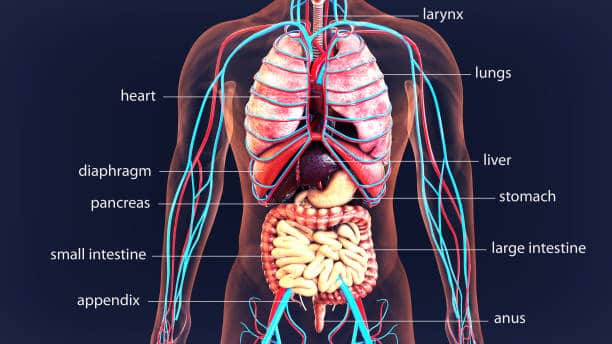
A&P is an intensely visual subject. Diagrams, 3D anatomy apps, and coloring books are not just for visual learners — they benefit everyone because spatial relationships between structures are nearly impossible to grasp through text alone.
Cognitive psychologists call this dual coding: combining visual and verbal information significantly improves retention and recall. Draw your own diagrams rather than simply studying pre-made ones. The act of reproducing a diagram forces your brain to process the information actively rather than passively.
3D anatomy platforms and whiteboard-style video lessons are particularly effective for understanding complex physiological processes like the cardiac cycle, hormonal feedback loops, or renal filtration.
When you can watch a process animated step-by-step, the sequence becomes intuitive rather than arbitrary. If you want recommendations for the best digital tools to support your learning, AllStudyGuide’s resource on best study tools for science students is a practical starting point.
4. Master Medical Terminology Early
A significant portion of A&P difficulty comes down to vocabulary. Most anatomical terms are derived from Latin and Greek roots, and each organ system introduces an entirely new set. Rather than treating terminology as a side task, invest time early in learning the most common prefixes and suffixes.
Once you recognize that “brady” means slow, “tachy” means fast, “myo” refers to muscle, and “cardio” refers to the heart, terms like “bradycardia” and “tachycardia” become self-explanatory. This root-word strategy scales across every system you study.
Mnemonics are another powerful tool for anatomical memorization. Creating a personal mnemonic — one tied to something in your own life — works better than using someone else’s because your brain already has strong associations with familiar material. For a deeper look at memory techniques tailored to science courses, see AllStudyGuide’s guide on how to memorize faster and retain information longer.
Recommended Anatomy and Physiology Courses
Choosing the right course can dramatically change your learning experience. Here are some well-regarded options:
- Anatomy and Physiology I and II (Community College)
A foundational two-semester sequence covering all major organ systems, cellular biology, histology, and lab practicals. Ideal for nursing and pre-allied health students. Labs include cadaver or model-based identification, giving hands-on reinforcement of lecture content.
- Human Anatomy and Physiology (Coursera / Khan Academy)
Self-paced online options that cover the same organ systems with video lectures, quizzes, and interactive diagrams. Khan Academy’s free A&P content is particularly useful for concept review, while Coursera courses often include graded assessments and certificates.
- OnlineMedEd Preclinical Curriculum
Designed for medical and PA students, this platform uses whiteboard-style video lessons that teach anatomy and physiology in clinical context. Integrated challenge questions reinforce active recall after each lesson, making it highly effective for retention.
- Kenhub Anatomy Learning Platform
A visually rich platform featuring interactive atlases, quizzes, and video tutorials organized by region and system. Especially strong for gross anatomy and histology. Suitable for medical, nursing, and health sciences students at all levels.
Quick-Reference Study Habits for A&P Success
Beyond core strategies, a few practical habits separate students who consistently score well from those who struggle exam after exam:
- Read the assigned textbook chapter before each lecture so terminology feels familiar when your instructor introduces concepts.
- Record lectures (with permission) and replay them during commutes, focusing on sections where your notes are thin.
- Form a weekly study group to quiz each other, fill knowledge gaps, and explain concepts aloud — teaching something is one of the surest ways to know whether you actually understand it.
- Maintain a running concept log for terms that appear across multiple systems, such as metabolism, homeostasis, and feedback loops.
- Sleep consistently — memory consolidation happens during sleep, and sleep deprivation disproportionately affects the recall of complex information.
For more on building a sustainable academic routine, AllStudyGuide’s article on how to create a study schedule that actually works offers a practical framework you can adapt to your A&P workload.
FAQs: How to Study for Anatomy and Physiology Effectively
Most students do well with two to three focused hours daily rather than long, infrequent marathons. Consistency matters far more than total hours. Short daily sessions spread over a full week will outperform six hours of last-minute cramming almost every time, particularly because A&P content builds on itself across chapters and systems.
Students most commonly cite the nervous system and endocrine system as the toughest units because both involve complex feedback mechanisms and dense terminology. The neuroanatomy section, in particular, requires understanding spatial relationships and functional pathways simultaneously. Allocate extra study time to these units and revisit them regularly throughout the semester.
Yes, and many students do so successfully using a combination of textbooks, online platforms, and interactive tools. The key is to replicate the structure a formal course provides: follow a system-by-system sequence, test yourself regularly, and do not skip lab-style visual practice. For self-study support, AllStudyGuide’s section on independent learning strategies covers how to build a self-directed study plan that keeps you on track.
Anatomy tends to feel harder initially because of the sheer volume of names and structures to memorize. Physiology feels harder once you move into complex processes like the renal countercurrent mechanism or the clotting cascade. In practice, they are inseparable — and treating them as one integrated subject rather than two separate syllabi is itself a key study strategy.
Beyond your course textbook, strong supplemental resources include Kenhub for visual anatomy, Khan Academy for free concept review, Anki for spaced repetition flashcards, and anatomical coloring books for active engagement. For curated study guides across multiple science subjects, allstudyguide.com is a reliable hub for organized, student-friendly resources.
Final Thoughts: Study Smarter, Not Just Longer
Mastering anatomy and physiology is not a matter of natural talent or a photographic memory. It is the result of applying the right strategies consistently over the length of the course. Active recall, spaced repetition, visual learning, structure-to-function thinking, and strong medical terminology foundations are the pillars that separate students who struggle from those who thrive.
Start by overhauling one habit at a time, replace passive rereading with active recall this week, add a spaced repetition app next week. Small, deliberate changes compound into dramatically better results by the time finals arrive. And remember, every expert in anatomy and physiology was once a student staring at the same overwhelming textbook you are holding right now.
If you found these strategies helpful, share this article with a classmate who is struggling, or drop a comment below with your own go-to A&P study tip. You can also explore more in-depth study guides at sllstudyguide.com to keep building your academic edge.
Leave a Reply