You have worked hard through high school, kept your GPA high, stacked your extracurriculars, and now you are staring at BU’s College of Arts and Sciences wondering if you actually have a real shot. The anxiety is real. With acceptance rates tightening every year, most applicants feel like they are flying blind with incomplete information.
This guide pulls together everything you need to know about the Boston University College of Arts and Sciences acceptance rate for 2026, the academic profile of admitted students, what CAS actually offers, and how to build the strongest possible application.
Boston University CAS Acceptance Rate in 2026
Boston University’s overall undergraduate acceptance rate for the Class of 2029 is 12.83%, based on 76,779 applications received and approximately 9,858 students admitted. This reflects a modest improvement over the Class of 2028’s 11% rate but remains firmly in highly-selective territory.
The BU College of Arts and Sciences does not publish a standalone acceptance rate separate from the university’s overall figure. However, CAS is BU’s largest college, enrolling more than 8,000 undergraduates across over 100 majors and minors.
Because CAS receives the broadest applicant pool spanning humanities, natural sciences, social sciences, and computational sciences, its admission rates track closely with the university-wide number.
Competitive programs within CAS, such as pre-medical tracks or neuroscience, can be functionally more selective due to applicant concentration.
For context, here is how BU’s acceptance rate has shifted in recent years:
- Class of 2026: 14% (80,794 applications)
- Class of 2027: 10.85%
- Class of 2028: 11%
- Class of 2029: 12.83% (76,779 applications)
The trend shows that while the rate ticked slightly upward for the Class of 2029, BU remains considerably more selective than it was five years ago when its rate hovered near 19%.
Class of 2029 Academic Profile
Understanding who gets in helps you benchmark your own application. The Class of 2029 paints a clear picture:
- Average GPA: 3.87 (most admitted students ranked in the top 10% of their high school class)
- SAT middle 50% range: 1,430 to 1,540
- ACT middle 50% range: 32 to 34
- Total enrolled: 3,461 students from 47 states and 68 countries
- Early Decision share: 59% of the class enrolled via ED
- First-generation students: Approximately 20% of the class
- Pell Grant recipients: Nearly 20%
BU remains test-optional through the Class of 2029 cycle, meaning submitting scores is not required. However, if your SAT sits above 1,450 or your ACT is 32 or higher, submitting them can strengthen an application, especially if your GPA is at the lower edge of the competitive range.
Early Decision at BU: Your Strongest Lever
One of the clearest strategic insights from the data is how heavily Early Decision shapes BU’s admitted class. With 59% of enrolled students coming through ED, applying Regular Decision means you are effectively competing for a fraction of the remaining seats against an enormous global pool.
BU offers two ED rounds. ED I closes November 1, and ED II closes January 4. Both are binding commitments. Students who apply ED signal serious intent, and the admissions office responds accordingly with meaningfully higher acceptance rates compared to Regular Decision. If BU’s College of Arts and Sciences is your clear first choice and the financial fit works for your family, the ED path is the most rational choice available to you.
For transfer applicants, BU’s overall transfer acceptance rate is approximately 42.84%, making that route considerably more accessible than freshman admission.
What Is the BU College of Arts and Sciences?
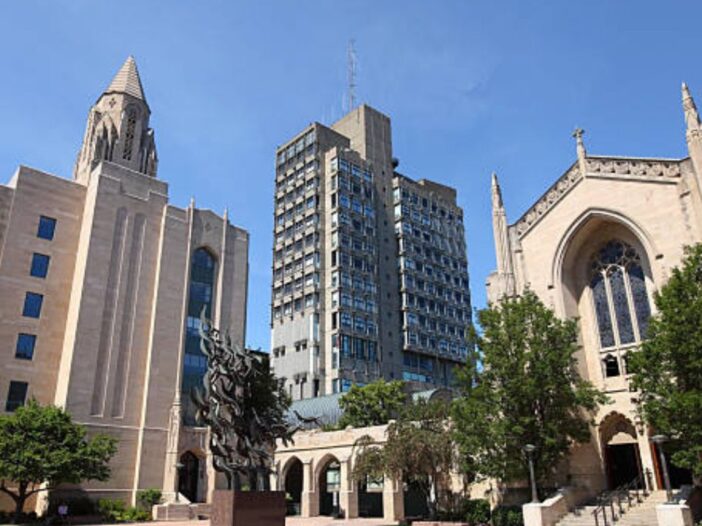
Founded in 1873 as the College of Liberal Arts, CAS was renamed in 1996 and has grown into the academic heart of Boston University. It currently houses more than 25 departments and nearly 25 interdisciplinary programs, spanning over 3,500 courses.
Graduate students can pursue master’s or doctoral degrees in nearly 50 fields through the associated Graduate School of Arts and Sciences.
CAS sits within a university ranked #42 among National Universities (U.S. News, 2025) and #88 in the QS World University Rankings 2026, giving graduates credentials that carry genuine market weight.
CAS Courses and Academic Offerings
Students at CAS earn a Bachelor of Arts degree and complete a Core Curriculum that builds competency in humanities, social sciences, and natural sciences. Most majors require 9 to 16 courses, with at least 8 courses concentrated within a home department.
Key academic areas and what each offers:
- Humanities (English, History, Philosophy, Classical Studies, Art History): Develops writing, critical thinking, and cultural analysis skills prized in law, media, and policy careers.
- Natural Sciences (Biology, Chemistry, Physics, Astronomy, Earth & Environment): Feeds into pre-medical, research, and environmental science pipelines; lab-intensive coursework with strong UROP research integration.
- Social Sciences (Psychology, Sociology, Economics, Political Science, Anthropology): Strong internship culture leveraging Boston’s proximity to hospitals, government agencies, and nonprofits.
- Mathematical and Computational Sciences (Mathematics, Computer Science, Statistics, Data Science): A fast-growing area supported by BU’s new Duan Family Center for Computing and Data Sciences, a fossil-fuel-free facility opened in 2022 and renamed in 2024.
- Interdisciplinary Programs (Neuroscience, Cognitive and Neural Systems, Women’s, Gender & Sexuality Studies, African American Studies, Archaeology & Environmental Science, Mathematics & Computer Science, Philosophy & Physics): These programs combine cross-disciplinary rigor and produce graduates with unusually flexible analytical skillsets.
- Frederick S. Pardee School of Global Studies (International Relations, International Studies, Regional Studies): Housed within CAS, Pardee prepares students for careers in diplomacy, international development, and global business.
Double-majoring is permitted, and CAS also offers BA/MA and BA/MS dual-degree pathways that allow students to complete both an undergraduate and graduate degree in approximately five years.
What BU Considers Most Important in Admissions
BU evaluates applications holistically, but it is transparent about priorities. The two factors ranked very important are rigor of secondary school record and GPA. Factors considered important include class rank, essays, recommendations, extracurricular activities, and character or personal qualities.
Test scores, when submitted, are ranked as considered but not determinative. Demonstrated interest matters too: BU’s yield rate is approximately 37%, which is lower than many peer institutions, so the admissions office actively values signals of genuine commitment including campus visits, contact with admissions counselors, and especially Early Decision applications.
For CAS specifically, admissions officers look for humanities and communication strength in applicants targeting social sciences or writing-intensive programs, and sustained intellectual curiosity demonstrated through coursework and independent projects.
Tips to Strengthen Your CAS Application
1. Take the most rigorous curriculum available.
AP and IB courses signal academic readiness. For CAS applicants, strength in English, social studies, and a foreign language through at least the intermediate level is a visible differentiator.
2. Write essays that reflect genuine intellectual curiosity.
CAS values students who love ideas, not just credentials. Your BU supplement is the place to connect specific professors, research centers, or courses at CAS to your academic goals.
3. Apply Early Decision if BU is your first choice.
With nearly 60% of seats filled through ED, this is the single highest-impact tactical decision you can make.
4. Submit test scores if they are competitive.
An SAT above 1,450 or ACT above 32 can reinforce an application, particularly for quantitative or science-heavy CAS tracks.
5. Demonstrate sustained commitment in activities.
Admissions officers favor depth over breadth. Two or three activities with real leadership outcomes or meaningful impact outperform a long list of peripheral memberships.
For more context on college admissions strategy, you can explore our posts on how to write a standout college application essay, review tips for choosing the right college major, and read about early decision vs early action: what you need to know. If you are also exploring peer schools, the guide on Boston University acceptance rate overall provides complementary detail. You may also find value in reading about how to get into top research universities.
FAQs Boston University College of Arts and Sciences acceptance rate
CAS does not report a separate acceptance rate. The university-wide rate for the Class of 2029 is 12.83%, and CAS rates align closely with this figure. Highly competitive majors within CAS may be functionally more selective.
The average GPA for the Class of 2029 was 3.87. To be a competitive applicant, you should aim for a 3.9 or higher. Nearly all enrolled students ranked in the top quarter of their high school class, with 92% in the top decile.
Yes. BU remains test-optional through the Class of 2029 cycle, which covers students entering in fall 2025 and spring 2026. All undergraduate schools and colleges, including CAS, follow this policy.
BU does not publish separate ED acceptance rates, but the data tells a clear story: 59% of the Class of 2029 enrolled via ED. This means the RD pool is competing for roughly 41% of seats from an even larger applicant group, making RD significantly more competitive in practice.
Yes. CAS offers Biology, Biochemistry, Neuroscience, and related majors with access to BU’s medical campus. The Undergraduate Research Opportunities Program (UROP) funds 500+ students annually for faculty-mentored research, which is a meaningful advantage for students building medical school applications.
The Boston University College of Arts and Sciences is one of the most academically rich environments in American higher education, and its 12.83% admission rate reflects how seriously thousands of talented applicants take that opportunity each year. Your chances are real if your profile is competitive and your application strategy is intentional. Start with your GPA, build tward the strongest possible essay, and decide early whether the ED path is right for your situation.
Data sourced from Boston University’s official Class of 2029 profile and BU’s College of Arts and Sciences academics page.

Leave a Reply